
The Indian stock market is closely connected to developments across international financial markets. Although domestic economic indicators, corporate earnings, monetary policy and investor sentiment remain important, movements in major overseas markets can also influence how Indian equities open and trade during the day. For this reason, understanding the global market can be useful for Indian investors seeking to prepare for each trading session.
Important signals regarding investor attitude, risk appetite, and future market direction are provided by global markets. Prior to the opening of the Indian market, investors can gain a more comprehensive understanding by monitoring important international indexes, currencies, commodities, and offshore futures.
Understanding the Global Market Pulse
Because international markets operate across time zones, events in one area may have an impact on markets that open later. For instance, changes in US stocks can have an impact on Asian markets, and changes in Asian markets can have an impact on Indian emotions.
In order to determine if global mood is generally favorable, negative, or neutral, investors keep an eye on important global indices, such as US, European, and Asian benchmarks. Sharp falls can signify caution, while a significant rally in foreign markets may indicate an improved appetite for risk.
Global market fluctuations, however, ought to be viewed as signs rather than firm forecasts. The Reserve Bank of India’s decisions, inflation data, business profitability, government policies, and institutional flows are examples of local factors that might drive Indian markets to move differently.
Why Offshore Futures Matter
Before the regular Indian equity market session starts, futures markets can provide investors a sense of how market players are positioning themselves. Because they trade during hours when India’s domestic exchanges are closed, offshore futures tied to Indian benchmarks are especially significant.
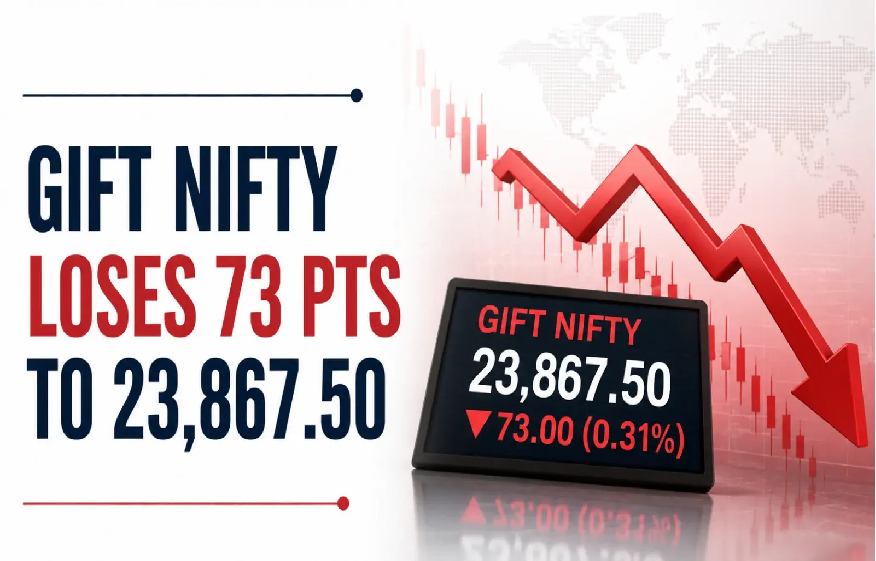
The Gift Nifty is one popular indicator that might provide hints about the possible opening direction of Indian benchmark indices. Investors frequently track its movement in tandem with big economic developments, overnight news, and global equities markets.
Reading the Gift Nifty Chart
The Gift Nifty chart can be useful when preparing for the trading day. Investors can observe price movements, trends and changes in market sentiment before the Indian market opens.
For instance, a potentially stronger opening sentiment may be indicated if Gift Nifty is trading much higher than the prior reference level and key worldwide indices are likewise bullish. On the other hand, Gift Nifty’s dip along with drops in international markets would indicate a cautious beginning.
However, investors shouldn’t assume that the opening direction will hold true for the whole of the session. After domestic trading starts, market conditions can shift quickly, especially when new institutional activity, corporate announcements, or economic data are released.
Connecting Global Signals With Domestic Factors
Following foreign markets in isolation is not the best strategy. Alternatively, investors can integrate domestic data with international indications.
An investor may examine overnight changes in US indices, Asian markets, crude oil prices, the US currency, bond yields, and Gift Nifty prior to the market opening. This data can then be contrasted with news from individual industries, company announcements, and domestic economic developments in India.
For example, due to their exposure to foreign clients, Indian IT companies may be impacted by a drop in global technology stocks. Similar to this, industries that are sensitive to energy costs may be impacted by large fluctuations in the price of crude oil.
Managing Risk Instead of Predicting the Market
Instead than promoting forecasts, global indicators are most helpful when they assist investors in managing risk. Just because an offshore futures indicator suggests a positive or negative opening does not mean that a trader should take a position.
Alternatively, investors can prepare for outcomes by using these indications. They can think about whether their positions offer enough risk protection if international markets are sluggish. They can still wait for confirmation from domestic price action before making a move if international markets are doing well.
This strategy can enable investors to react to market situations methodically and lessen emotional decision-making.
Building a Daily Market Routine
Investors can make more informed choices if they follow a regular pre-market practice. Checking international indexes, Gift Nifty, overnight news, currency fluctuations, commodities, domestic announcements, and significant economic events planned for the day are a few examples of this.
Additionally, investors need to differentiate between long-term investing choices and short-term trading indications. For a day trader, a brief drop in the world market might be significant, but for an investor with a five- or ten-year time horizon, it might not be.
Conclusion
For Indian investors getting ready for every trading session, offshore futures charts and global market moves might offer useful perspective. Before Indian stocks start trading, the Gift Nifty chart might give an idea of market expectations, while the global market provides insight into sentiment regarding foreign risk.
These signs should never be regarded as assured predictions, tho. A more balanced strategy can be achieved by combining foreign signals with domestic fundamentals, technical levels, economic trends, and disciplined risk management. Investors can approach every trading day with more knowledge and preparation if they follow the global pulse while keeping an eye on the dynamics of the Indian market.